
Cedar Privacy Fence Staining in Chicago, IL
Project at a Glance
| Detail | Project Information |
| Location | Chicago, IL |
| Fence Type | Full privacy cedar fence with black metal posts and top/bottom rails |
| Fence Condition | Newly installed cedar, not previously stained |
| Stain Condition | Rich walnut/mahogany semi-transparent penetrating stain |
| Post Finish | Black metal posts painted to match, included in scope |
| Coverage | Full perimeter including gate panels on both faces of each board |
| Result | Even, deeply saturated finish on new cedar that will extend the fence life significantly |
Side Elevation: Rich Walnut Stain Against a Tan and White Home Exterior
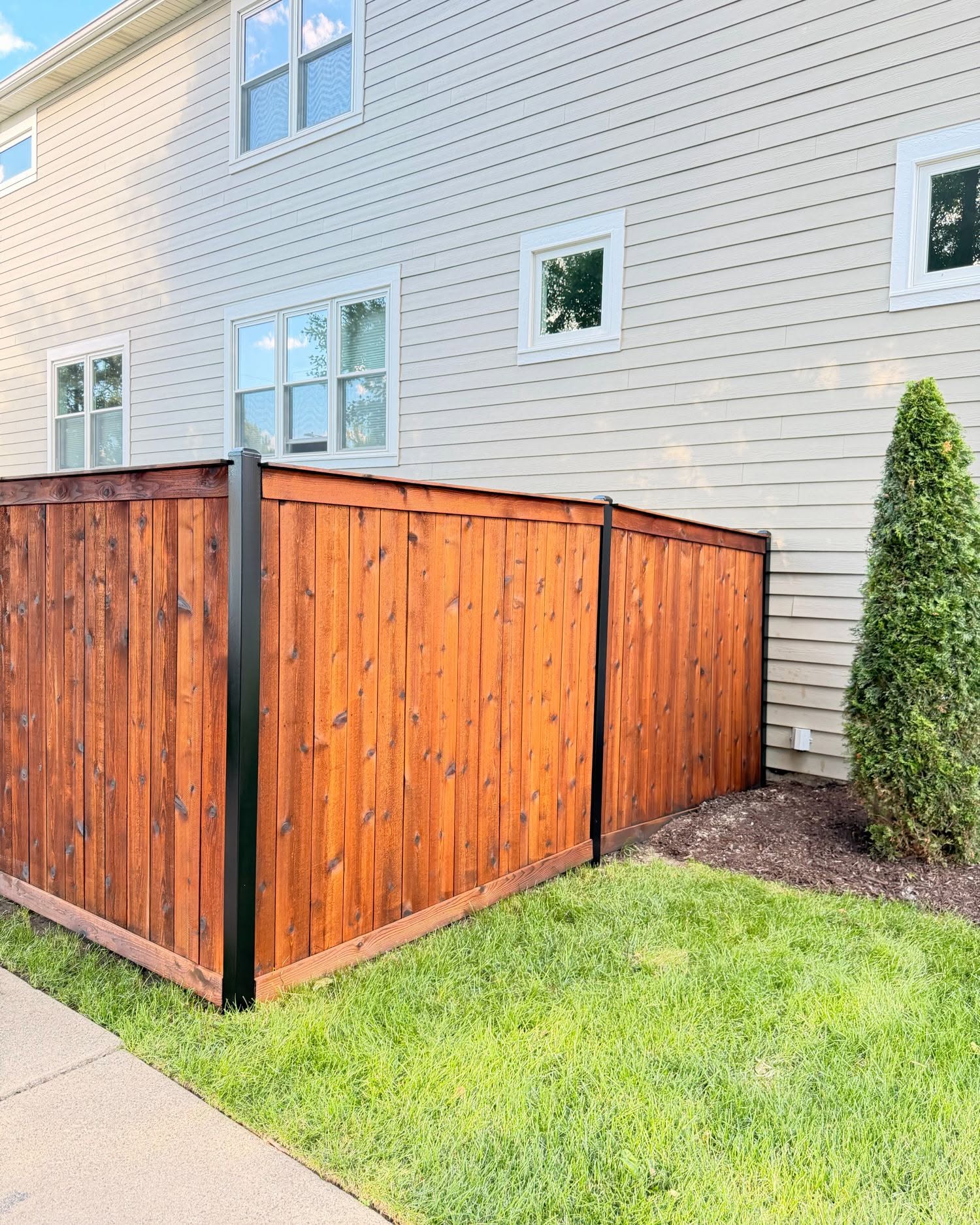
This Chicago property had a new cedar privacy fence installed around the backyard perimeter, with black metal posts and matching top and bottom rails that give the fence a clean, modern profile against the natural wood. New cedar is one of the best surfaces a staining project can start with: the wood is open-grained, uncontaminated, and ready to absorb a penetrating stain deeply and evenly when it has had enough time to dry after installation. The homeowner wanted a warm, rich tone that would complement the tan and white home exterior and give the fence a finished, intentional look from day one.
Getting the stain timing right on new cedar matters more than most homeowners expect. Lumber that was still holding moisture from the mill or from rain during installation will not accept a penetrating stain at full depth, because the water already occupying the wood fiber blocks the stain from penetrating. We assessed moisture content before scheduling the stain application and confirmed the cedar was ready to accept the product before we started. Staining too early on new cedar produces a surface-level bond that does not hold through the first full season of weather.
Gate Elevation: Coverage on the Full Gate Panel Including Both Faces
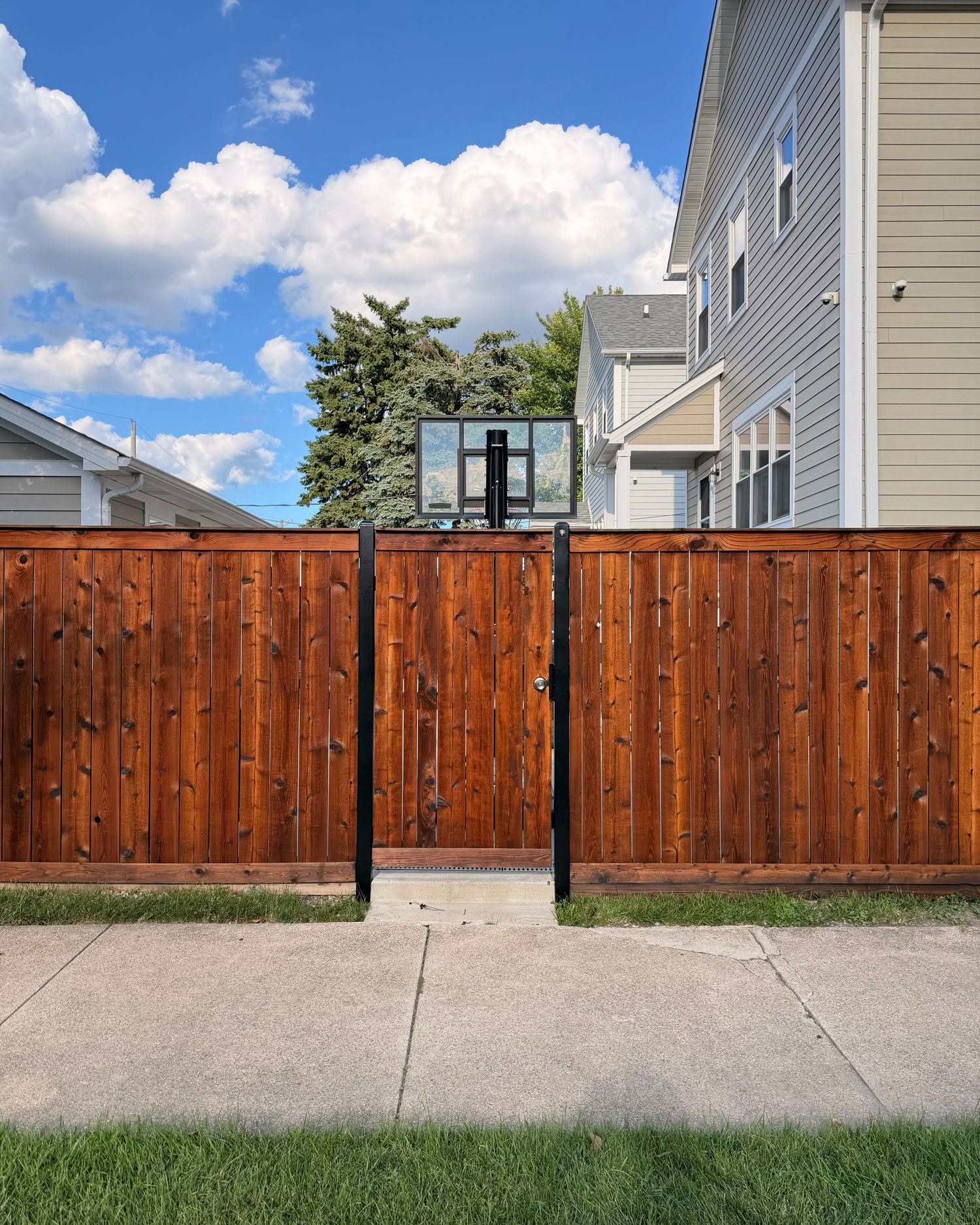
The gate panel presents the most visible section of any privacy fence from the street, and it also receives the most direct handling through daily use. Gate panels flex slightly when opened and closed, which puts stress on any film-forming finish at the edges and hardware locations over time. Penetrating stains handle this better than solid paint on a gate because the stain is inside the wood rather than forming a surface film that can crack and lift at stress points. We stained both faces of the gate panels and all edges, not just the outward-facing surface, to protect the wood from moisture entry on all sides.
Full Perimeter View: Consistent Color Across Every Board and Panel
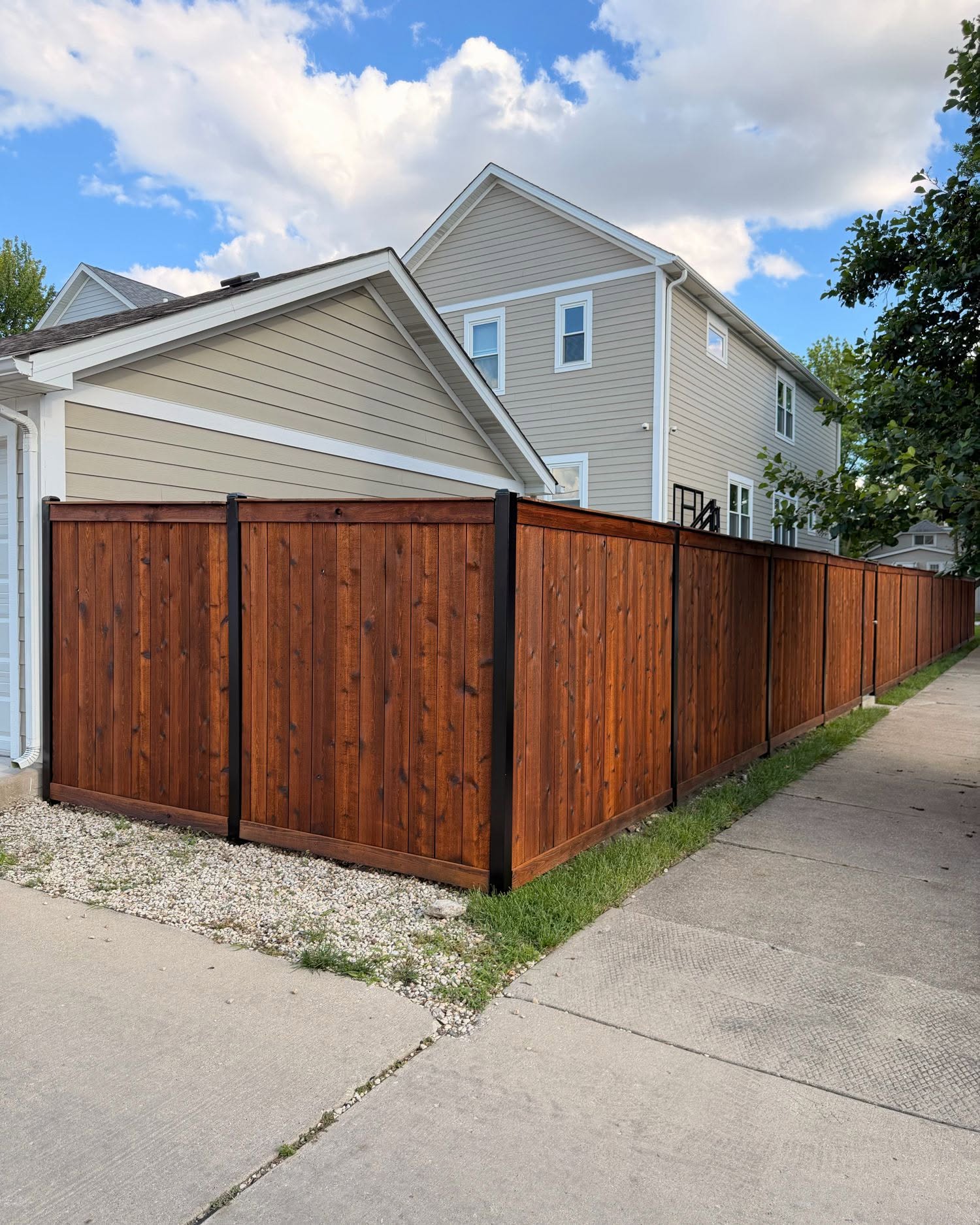
The third photo shows the full length of the fence run along the side of the property. Color consistency across a long run of fence boards is the clearest indicator of whether a staining project was done correctly. Uneven coverage, blotchy absorption, lap marks where one section dried before the adjacent section was reached, or thin spots from inadequate back-brushing all show up at this scale in a way that is not visible when you are looking at a single panel up close. The stain is even from the first post to the last, across all panels and both sides of the fence.
Cedar accepts stain differently depending on where the cut falls relative to the grain: edge grain absorbs stain more slowly than flat grain, and the knots that give cedar its character are denser and absorb differently still. Working the stain in sections with proper back-brushing and maintaining a wet edge across the panel faces is what produces the uniform color the photos show. Applying stain and walking away without working it in produces a blotchy result on cedar regardless of product quality.
Why First-Coat Staining on New Cedar Produces the Best Long-Term Results
A fence that is stained correctly on the first application, before any weathering has begun, starts its life in the best possible condition. Unstained cedar begins graying within weeks of exposure as UV breaks down the lignin in the wood surface. Once that graying process starts, the surface has to be cleaned and brightened before stain will penetrate evenly, because the oxidized wood fiber at the surface blocks absorption. Staining new cedar before any weathering begins skips that step and allows the stain to penetrate at maximum depth into clean, open wood grain.
The walnut tone chosen for this project will hold its richness longer on properly penetrated cedar than a surface-applied finish would, because the stain is inside the wood where UV and moisture cannot reach it as directly. When the fence needs its next maintenance coat in three to five years, depending on the weather exposure each elevation receives, restaining will be straightforward because there is no failing film to remove first. The first coat sets up the maintenance cycle for the life of the fence.
Fence and Deck Staining in Chicago and the North Shore
Sunpainting stains and finishes new and existing fences, decks, and exterior wood surfaces throughout Chicago and the surrounding North Shore communities. New cedar projects like this one, where the goal is to establish a durable finish from the start rather than restore a weathered one, are a significant share of our exterior wood work. The product selection, moisture assessment, and application technique that produce a result like this are the same on every project regardless of size or location.
If you have a new or existing fence, deck, or exterior wood surface that needs staining in Chicago or the surrounding area, we are ready to help. You can learn more about our approach to exterior wood surfaces on our exterior painting and staining services page, or reach out directly to schedule an estimate.
Request a free estimate and we will come to the property, assess the wood condition, discuss your finish goals, and give you a written quote with no hidden costs.